What will encourage the next generation of professionals to begin and grow their careers in the Ann Arbor region?
The latest survey of University of Michigan Emerging Professionals, completed through a partnership between Ann Arbor SPARK and the University of Michigan’s Quantitative Methods in the Social Sciences (QMSS) program, offers a useful perspective on that question.
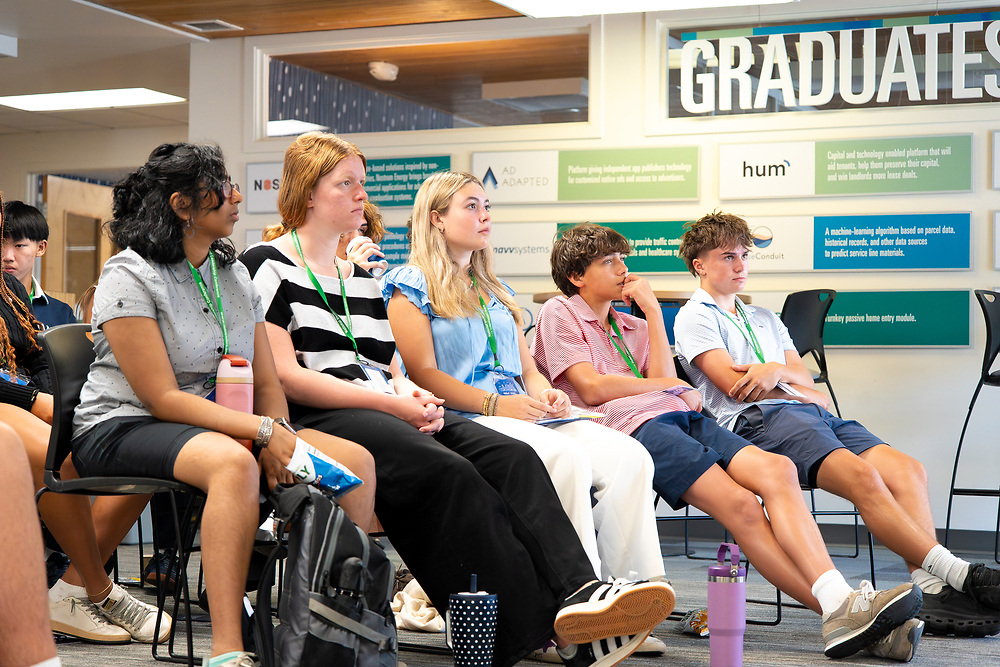
The QMSS capstone team analyzed responses from 286 primarily upper-level University of Michigan (U-M) students in technical, business, analytical, and social science fields. Building on a similar survey conducted in 2022, the research explored what students value in a job, how they evaluate potential communities, and how they perceive the Ann Arbor area as a place to live and pursue a career.
The findings reinforce several familiar priorities. Emerging professionals want good-paying jobs related to their interests and education, opportunities to advance, meaningful work, and the stability to begin building their lives. They also highlight an important economic development opportunity: ensuring that students understand the breadth of companies, industries, and career pathways available in our region.
Career opportunity remains the foundation
Salary was the highest-rated workplace consideration, followed by advancement opportunities, meaningful work, work-life balance, and company culture. Students also placed considerable value on traditional benefits, including health insurance, retirement plans, and paid time off.
These priorities were broadly consistent with the 2022 findings. Despite significant changes in technology and the workplace, the fundamentals of a compelling career opportunity remain relatively stable: competitive compensation, room to grow, meaningful responsibilities, and a strong overall employment package.
Hybrid work was preferred by nearly 60 percent of respondents, while very few selected fully remote work. Most students also indicated some flexibility in their preferred arrangement. For employers, that suggests work location remains part of the equation, but it is rarely the only factor shaping a candidate’s decision.
Students also expect artificial intelligence to play an important role in their future careers and reported feeling comfortable knowing when and how to use it. This creates an opportunity for employers to show how their teams are adopting emerging technologies, developing new skills, and creating meaningful roles in a changing economy.
A strong region with an opportunity to improve visibility
The Ann Arbor region has a strong foundation for attracting and retaining talent. It is home to world-class educational and research institutions, an innovative business community, a highly skilled workforce, and growing industries ranging from mobility, software, and life sciences to advanced manufacturing, health care, professional services, and emerging technologies.
Survey respondents also viewed the region positively in areas such as higher education, safety, diversity, and its welcoming environment. At the same time, they expressed questions about affordability, housing, and the availability of career opportunities.
Those perceptions should not be interpreted as a complete assessment of the region or its economy. Rather, they point to an opportunity to strengthen communication and better connect emerging professionals with the region’s economic opportunities. Economic growth is most meaningful to emerging professionals when they can see how it translates into specific employers, occupations, salaries, internships, and long-term career pathways.
The survey found that respondents most frequently expected to pursue careers in finance and insurance, professional and technical services, and business management. Health care and manufacturing, both important parts of our diverse regional economy, attracted less interest from this particular group.
That contrast does not mean local opportunities are limited. It suggests that students may not always recognize the range of roles found within those industries. A manufacturer may need software developers, data analysts, engineers, communications professionals, supply chain specialists, and financial talent. A health care organization may offer careers in technology, research, operations, cybersecurity, human resources, and business strategy.
The opportunity is to make those connections visible earlier.
That work is already an important part of regional talent retention efforts. Ann Arbor SPARK and its partners create multiple ways for students and emerging professionals to discover local employers, build professional networks, and better understand the career opportunities available in the region.
SPARK’s regional job portal connects job seekers directly with opportunities at companies across the Ann Arbor area, making local openings easier to discover. Events throughout the year also bring emerging professionals together with employers, entrepreneurs, and industry leaders, creating opportunities to build relationships and become more connected to the region’s professional community.
Tech Homecoming, part of a2Tech360, is one example of this approach. The annual tech-focused career fair brings together job seekers and hiring companies in a casual networking environment designed to create direct connections between talent and local employers. Other a2Tech360 events, including Tech Trek, expose students and professionals to the breadth of companies, technologies, and career paths that exist across the region.
Together, these efforts help address an important challenge highlighted by the survey: career opportunities cannot influence a graduate’s decision to stay if they do not know those opportunities exist. Making employers and career pathways more visible — and creating opportunities for emerging professionals to develop meaningful connections within the local business community — can help more students see the Ann Arbor region not only as a great place to earn a degree, but as a place to build a career.
Building awareness from the classroom to the workplace
Talent attraction and retention do not begin during a student’s final semester. Career awareness develops over time, beginning in K-12 education and continuing through community college, university, internships, and early work experiences.
Local businesses can play a significant role throughout that pipeline. Classroom engagement, company tours, job shadowing, internships, apprenticeships, mentorship, applied research projects, and faculty partnerships help students understand how their interests and education can translate into careers close to home.
This is especially important as industries and occupations continue to evolve. Many of the jobs that will drive the region’s future growth may not be familiar to students today. Greater employer engagement can help young people understand emerging career pathways while also giving businesses the opportunity to shape curricula, build relationships with future workers, and strengthen their long-term talent pipelines.
Ann Arbor SPARK works with education and workforce partners throughout the region to help build those connections. Partnerships with the University of Michigan, Eastern Michigan University, Washtenaw Community College, Ann Arbor Public Schools, and other area institutions help connect employers with students at different stages of their education and career exploration. Through internships, career fairs, student engagement, employer introductions, and other work-based learning opportunities, SPARK helps businesses reach emerging talent while giving students greater exposure to the companies, industries, and career paths available close to home.
These connections are especially valuable before students enter an active job search. Meeting a local employer through a classroom visit, internship, career event, or other hands-on experience can broaden a student’s understanding of where their skills might fit and put regional companies on their radar well before graduation.
The findings also support a more targeted approach to talent attraction. Students with existing ties to Michigan and the Midwest may be especially receptive to regional opportunities, while messages about lifestyle should be paired with practical information about jobs, compensation, housing choices, transportation, and career progression. The goal is not to compete with larger cities by imitating them. It is to clearly communicate the strength of professional opportunity, community, stability, and quality of life available here.
Economic development as a connector
No single organization can address talent needs alone. Strong regional talent systems depend on collaboration among employers, educational institutions, workforce agencies, economic development organizations, and community partners.
Ann Arbor SPARK serves as a connector among those groups. We help companies navigate workforce resources, connect with education and training partners, raise awareness of regional career opportunities, and reach candidates who may not yet know where their skills fit within the local economy.
For employers, the survey is a reminder that attracting emerging professionals requires more than posting an opening. Companies benefit from clearly communicating salary ranges, benefits, advancement pathways, workplace arrangements, professional development opportunities, and the type of impact early-career employees can make.
It is also a reminder to engage before a position becomes available. Building relationships with students, faculty, career services teams, and workforce partners can create a stronger and more diverse talent pipeline over time.
Resources for employers looking for talent
Employers in Washtenaw County can post qualifying technical and professional positions at no cost through the Ann Arbor SPARK Job Portal. Companies can also connect with candidates who have joined the SPARK Talent Network and work with SPARK to identify additional workforce, education, and industry partners.
Michigan Works! Southeast is another important regional resource. Its business services include recruitment and hiring assistance, connections to career seekers, hiring events, workforce training, apprenticeship support, and programs that help companies develop and retain employees.
Find your next opportunity in the Ann Arbor region
For students, recent graduates, and experienced professionals considering their next move, the region offers opportunities across technology, mobility, health care, advanced manufacturing, professional services, life sciences, education, and many other fields.
Job seekers can search current openings through the SPARK Job Portal and join the SPARK Talent Network to share their skills, experience, and career interests with participating employers.
Michigan Works! Southeast also offers career advising, employment services, training assistance, hiring events, and other resources for individuals pursuing their next opportunity. The SPARK events calendar includes career fairs, professional development programs, networking opportunities, and community events.
Registration is now open for Tech Homecoming, taking place September 22 as part of a2Tech360. The free event for job seekers is designed to make connecting with local employers feel more like networking than a traditional career fair, bringing hiring companies and candidates together in a relaxed setting. Job seekers can make new professional connections, learn about companies they may not have encountered before, explore current and future opportunities, and receive a complimentary professional headshot.
Thank you to the QMSS team
Ann Arbor SPARK is grateful to Dr. Ariel Hasell and the QMSS students who conducted this research and translated the survey responses into useful insights for employers, educators, economic development partners, and the broader community: .Tonwaan Apiratikiat, Dalton Aysseh, Rea Bardhi, Celia Bell, Anna Bickersteth, Vincent Chang, Schumi Chen, Elizabeth Cohn, James Dabrowski, Isaac Davis, Fatimata Deme, Zachary Edwards, Aurora Ehrlich, Adonis Farah, Nathaniel Guinta, Ava Hoffman, Samantha Howden, Anna Jacoby, Akshara Karthik, Maya Khadr, Abigail Kurniawan, Emma Madden, Nicole Manalac, Sorrel Miller, Sarah Mojica, Carolina Mondragon-Tadiotto, Emma Moore, Zachary Perna, Parker Pfeffer, Luke Richardson, Bennet Roman, Bradley Schessel, Sam Schuyler, Cole Sheldon, Lindsey Smith, Jack Teachman, Dina Tedla, Micole Turtel, Giancarlo Thomas Vettraino-Kobold, Kelsey Wallace, and Breah Marie Willy.
The QMSS program is currently seeking companies and organizations interested in partnering on applied student projects during the next academic year. Businesses with a potential research or data project can contact Dr. Hasell at hasell@umich.edu to explore a partnership.
