
In this episode, Paul sits down with Sarah Miller to discuss Destination Ann Arbor’s new Tourism Impact Plan and what it could mean for Washtenaw County’s future. Sarah shares why now was the right time to launch the effort, how extensive community engagement is shaping the plan, and why tourism should be viewed as a long-term economic and quality-of-life driver — not just a visitor industry.
/
READ INTERVIEW
Paul Krutko: Welcome to Ann Arbor SPARK’s CEO Podcast…Conversations on Economic Opportunity. My name is Paul Krutko, and I’m the President and CEO of Ann Arbor SPARK.
Today, I’m joined by Sarah Miller, President and CEO of Destination Ann Arbor. Sarah has been with the organization for more than two decades, stepping into the CEO role after serving in a number of leadership positions, including Chief Operating Officer and Vice President of Finance and Administration. Over that time, she’s helped guide Destination Ann Arbor through significant moments of change — from the unification of the Ann Arbor and Ypsilanti visitor bureaus to navigating the challenges of the pandemic and strengthening the organization’s role as a driver of economic activity in our region.
Today, we’re going to focus on the Tourism Impact Plan — what it is, how it will shape the future of the Ann Arbor region, and the role it will play in driving economic activity, supporting local businesses, and strengthening our sense of place.
Sarah, welcome to the podcast.
Sarah Miller: Thanks for having me, Paul.
Paul: Yeah. So as mentioned, you’re currently in the middle of developing the Tourism Impact Plan. What prompted this effort and what questions are you hoping it will answer for the organization and the region?
Sarah: Well, short answer, it’s time. I think you were a part of what was our Washtenaw 2030 plan back then. If you recall, and I’m not kidding, when I tell you the salads were on the table when the entire world shut down, when we were about to unveil that plan. That was literally March 13th of COVID of 2020 when we had our long-term plan ready to go last time, and the world fell apart. So a lot’s changed since then, obviously. So it was time.
We’re finishing up a three-year strategic plan, and since COVID, since all that has happened, we’ve really grown into much more of a complex, I’d say, multi-community destination with strong assets across all of our seven communities. And at the same time, these expectations around tourism I think have shifted. It’s no longer just about attracting visitors to our area. It’s about how tourism supports our quality of life for our residents.
So this tourism impact plan is really designed to answer a few critical questions for us. Where are we truly competitive today against our competitive set, and where are we not? What types of experiences and infrastructure do we need to invest in to stay relevant against that competitive set, and how do we grow the visitor economy in a way that aligns with community values and priorities?
So this is really about creating and adopting a 10-year roadmap that connects tourism to the broader economic development and community outcomes than just visitation numbers for us.
Paul: So you just really mentioned what I was going to ask you next. There is this balance that you think you’re trying to achieve between visitor experience with community priority. So what’s the engagement process been looking like and how are you ensuring that residents, businesses, and partners all have a voice?
Sarah: It’s really about the community engagement process, and it’s all about it. It’s a huge part of this process. So it’s a very intentional, multi-layered approach for us. It’s a county-wide engagement process. We’ve got interviews and focus groups, 30 one-on-one conversations targeted with many different layers of people across all entities, arts, cultures, restaurants, community groups, listening sessions in every community that you can have. There is over a thousand surveys we have received so far. So the residents are chiming in. We have had listening sessions in the communities. All seven communities have chimed in. And then we’re going to get into individual visioning sessions as well across every segment of the community we can think of, so that we can get that feedback from everybody we can possibly get from, to hear what they want. The goal is simple. Just make sure that the plan reflects not just the tourism industry, but the lived experience and aspirations of the people who call this place home.
Paul: Yeah. It’s interesting that as I’ve lived here, Washtenawe County to me is a small version of a much larger metro area. And what I mean by that is you’ve got sort of the density in Ann Arbor, but then you have these small towns like Chelsea and Dexter with great environments, and you have places like Manchester. We make a point to go to the Chicken Broil. I mean, it’s those kinds of things. So it’s an interesting environment to be doing this work in.
Sarah: And it’s changed since COVID, because prior to COVID, the smaller destinations that surround Ann Arbor weren’t as interested in being engaged in this tourism economy and now they are. So it’s great to have that engagement.
Paul: Yeah. Well, so obviously this is something that is going to help your board think about what they should be focusing on and what the teams should be focusing on moving forward. So are there some things you’re hoping to clarify or prioritize from a leadership and governance perspective?
Sarah: Exactly. For our board, from their perspective, it’s about clarity and alignment. Tourism touches a lot of areas, as you’ve mentioned, economic development, community development, infrastructure, quality of life, and historically these conversations can happen in silos. And our board is really looking for this plan to define what is Destination Ann Arbor’s role in that broader ecosystem. Where should we lead? Where should we support and where should we partner, and what are the highest impact priorities we should be investing in over the next decade?
It also gives us a shared data-driven foundation through benchmarking and analysis, whether it’s visitor economy data, infrastructure gaps, or experience development. Where can we make more informed decisions as a board? So ultimately, this plan will help them move from reacting to opportunities for proactively setting a long-term direction.
Paul: So I’m curious, this isn’t one of the questions that we had prepared before, but this is the way the podcast works sometimes. I’m curious, you mentioned benchmarking, and we do benchmarking as well. Can you highlight a few of the communities that you’ve included that you think are appropriate peer communities, I guess?
Sarah: We spent a lot of time actually benchmarking multiple cities that we knew were going to be likened to the area. As you’ve mentioned before, we’ve talked about this. We’re a very unique destination. For the size that we are, we don’t have a meeting space large enough. And we’ve had this conversation multiple times, Paul, large enough for the destination. And it’s always been shocking to people when we talk about this that there’s nowhere to meet in this area. That’s large enough to hold a large convention space and people are shocked when they learn that. So finding a comp set close to the Ann Arbor area has been difficult. So we did do a close example of that. And our comp set we’ve found was, and if I butcher some of these names, I apologize. Brezos County, Texas, St. Joseph County, Indiana, their primary city, South Bend.
So maybe I should go with the the primary cities: South Bend, IN; College Station, TX; Gainesville, FL; Boulder of course; Fayetteville, AR; Lansing; Winston Salem, NC; Kalamazoo, MI; Athens, GA; Bloomington, IN; and Lexington, KY. And we did a reach city as well, which is Madison, WI. We say reach city there because their population as a county is close, but obviously their hotel size, their rooms are much larger. They do have a convention center. They have over 11,000 hotel rooms and such, but that’s the comp set.
Paul: Interesting because those are similar to the ones we have. So one of the things moving forward in our working relationship is that would be something to maybe try to work on aligning, which is many of those are in our competitive set as well. We do some larger cities in the context where we can normalize the data based on the population. We would include in Austin, which you wouldn’t necessarily include because obviously they have a massive, which they just tore down, but they have a massive convention center. So that’s interesting. I went off our script a little bit because I was curious about that.
Sarah: And we do as well. I mean, we also compare ourselves to some of the larger destinations. Detroit, Grand Rapids are always something that we do compare ourselves to, and I don’t think it’s wrong to do that. We want to compare ourselves. We want to be bigger and better. And a lot of times we are playing in that same space because we do hit above our weight. You know that.
Paul: Yeah, I know. I know. Okay. So one of the opportunities that you’ve already described is how do you get everybody rowing in the same direction, and how do you see the plan helping Washtenaw County around shared priorities? And you mentioned something that I think is really important about your work and our work is sometimes we have to hold up a mirror to the community and that they think this is what the situation is and it really isn’t the situation. And the one I’ll just play off of what you already said is we’re always very concerned that we grow companies here who want to have a user conference. I’m talking about a tech company, and they don’t have a destination here a location that they can hold that meeting. So in our world, they go to someplace else, and then they might decide, well, that’s a better place for us to do business if you follow that chain.
So this is an opportunity to kind of hold that mirror up, I think, and think about the future.
Sarah: Yep, exactly right. And honestly, I think that’s kind of one of the exciting parts of this work is when you do get to show and educate people in a way, Washtenaw County has incredible assets that we have here, and each community has its own identity priorities and that’s a strength, but it can be harder to align around some of those shared goals. This plan, I hope, introduces some of those ideas to Washtenaw County as kind of a destination network where each community can play a role and together we can create something stronger than any one place can alone individually.
So by grounding this plan and data and community input, we can identify a few clear shared priorities where that strengthening our meetings and events ecosystem maybe can grow sports tourism or enhance our outdoor and cultural experiences and invest in some of these infrastructure needs so that we can define milestones and measure success so everyone understands what progress looks like and how they can contribute to it.
Paul: Because one of the things I think I gather in the conversation and conversations we had before is one of the things the community needs to understand is let’s even just talk about a basic thing, restaurants. They have different clienteles and so you have a local audience and you have a visitor audience. The visitor audience can enhance the economics of the restaurant to be able to continue to provide that kind of ambiance or that kind of restaurant experience to the local community. So it has this benefit of visitors who help us have a better quality of life because they are a customer for those entrepreneurs who are taking this on, that it’s kind of risky.
Sarah: It’s all about the role. Everyone has a part in it. They all do. And some people, it’s hard sometimes when you don’t always see your part in the larger role, and sometimes that’s missing, but everybody does play a part. It is an ecosystem.
Paul: Yep, great. Well, so were there any other things that you thought you would want to share about the plan itself and how it’s moving forward?
Sarah: Well, we just finished that community gathering of information. So now we’re compiling that data. In May, we’ll have a state of the destination report that we’ll review, and then we’re really going to get into that fun stuff of refining what the community has said and really getting to the bottom line of what is that next step? What is that plan? And sharing back to your point earlier, kind of reflecting that mirror. This is what you’ve said. Now do you believe it? Do you buy in? And now getting everyone to say, yes, I agree. This is the plan. And I’ve said this before, Destination Ann Arbor does not do this alone. We don’t build things. We don’t make things. We don’t make that happen. So this is going to have to be a community-agreed-upon plan because if it isn’t, then it doesn’t go into the plan because it won’t happen.
I don’t believe in having something in a plan to have it in a plan to sit on a shelf. It has to be something that will get done, otherwise it doesn’t go in the plan. So if the community sees something in this plan and say, it’s a convention center, we’ll just, because it’s been the topic at hand, this conversation, if it is reflected back that a convention center is needed in the destination and the community says, “Oh no, no, I’m not buying into that. I don’t agree.” Then I’m not putting that in the plan because it won’t happen and there’s no need to put something into a plan that will not be accomplished. That’s not how Destination Ann Arbor operates. If there’s going to be something in this plan, it will happen. We are 100% true believers of getting something done in this plan. So we’re not going to force-feed something to the community if they don’t want it.
We didn’t build this plan based on that. This is what the community input was for. We built this for the community. This is listening to them. That’s why we did it this way.
Paul: But I think the other side of that is by doing it the way you’re doing it, you are informing those that are in leadership positions in government and in private sector and perhaps at the university about what the community thinks it needs. So oftentimes, not saying that happens here, past experiences that I’ve had, that there’s a disconnect between what the leaders think and where the community’s at. And so by you doing this baseline work of engaging the community as extensively as you have, you are able to say, “This is where the community is at.” So I think that’s really a good approach and you should be commended for taking that approach.
Sarah: Thank you. I believe it starts with the community. It’s the only way that something can be done.
Paul: Well, I think you covered the last question. I’m going to give you a chance if you want to amplify it, but at the end, what would success look like for you?
Sarah: Great question. And really success for me, and this goes beyond the plan to be honest. It really is when tourism here is seen as more than just an industry. It’s really a community asset. In practical terms, that means that we have a clear shared vision that communities across the entire county recognize themselves in, that we’re making more of a strategic coordinated investment in these experiences and infrastructure, if that’s what it turns out to be, that we’re growing this visitor economy in a way that is measurable and sustainable and that residents feel that tourism enhances their quality of life and not just compete with it so that we’re all in growing in the same direction as you mentioned earlier, that we build this around long-term stewardship, that we can all work together. There are a lot of groups here that we work in a lot of different silos in this community, and I really want us to pull together so that we can accomplish something really great here.
I think we can, and I’d love to see it happen.
Paul: Yeah. Well, we’ll have you back when the plan gets sort of in its final shape, and we can share what you’ve come up with and where we all can pitch in to make it happen. So really appreciate you taking some time today to talk with us about this planning process and sharing it with the folks that listen to these podcasts.
Sarah: Thanks so much for having me, Paul. Appreciate it.
Paul: So for more information about Destination Ann Arbor, do you want to give us a web address for people to look at?
Sarah: 100%. For things to do in the larger Ann Arbor region, please visit annarbor.org.
Paul: And I want to thank our audience for listening and learning more about SPARK and how we impact the Ann Arbor region’s economic future. These conversations are brought to you by Ann Arbor SPARK. For more information about Ann Arbor SPARK, you can find us on the web at annarborusa.org. We’re also on Facebook, Instagram, and LinkedIn.
Sarah Miller’s Bio
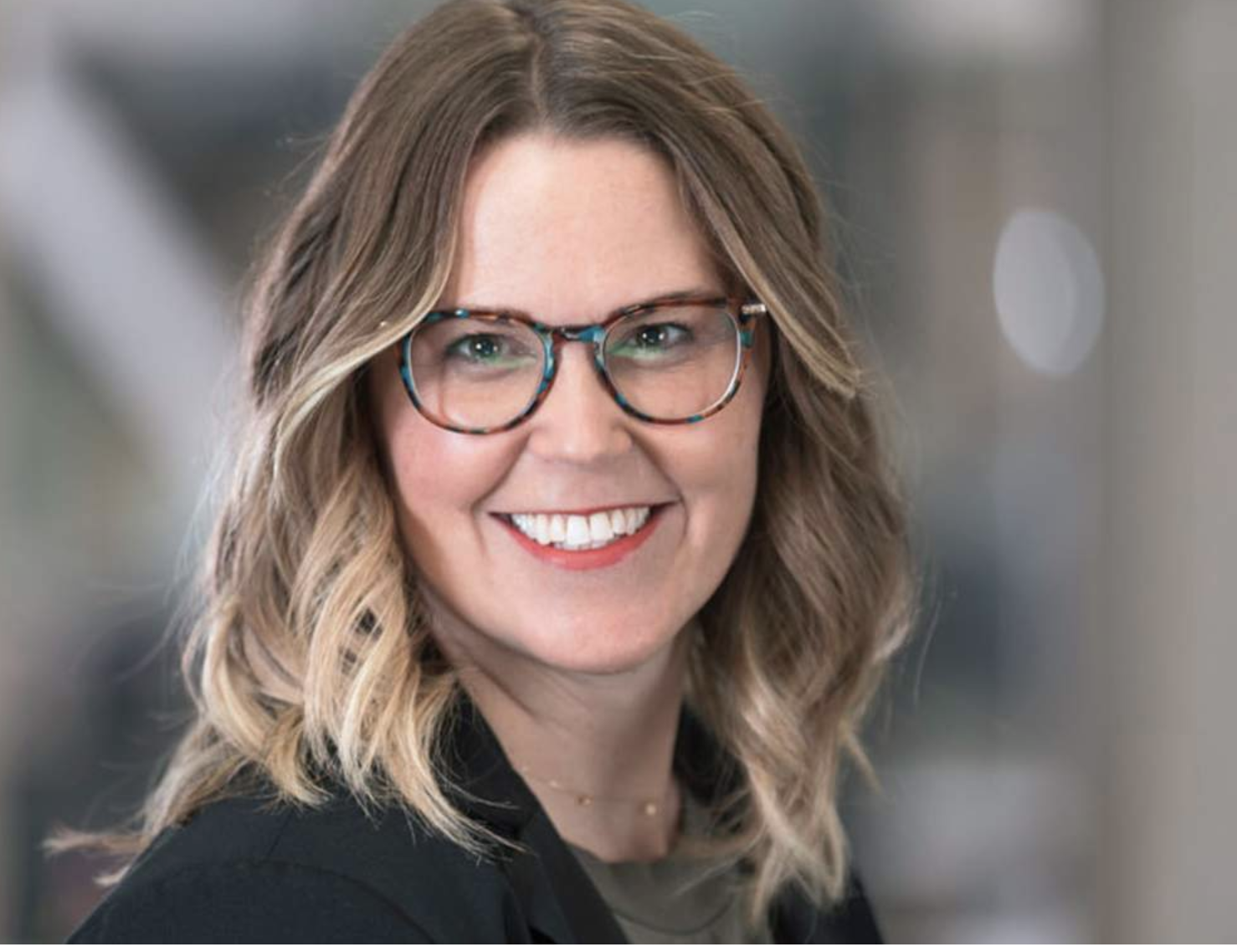
Sarah Miller is President & CEO of Destination Ann Arbor, where she has been a key leader since joining the organization in 2001. Over the past two decades, she has held roles including Finance Administrator, Vice President of Finance & Administration, and Chief Operating Officer before being named CEO. She played a major role in the unification of the Ann Arbor and Ypsilanti visitor bureaus, helped guide the organization through the financial challenges of the pandemic, and has expanded Destination Ann Arbor’s role as both a community advocate and economic driver. A lifelong Washtenaw County resident, Sarah is deeply involved in the region through service on numerous boards and committees and brings a strong passion for promoting the community she calls home.
