By Sarah Bricker Hunt for PrideSource
How three entrepreneurs and their SPARK partnerships are reshaping Michigan’s tech landscape
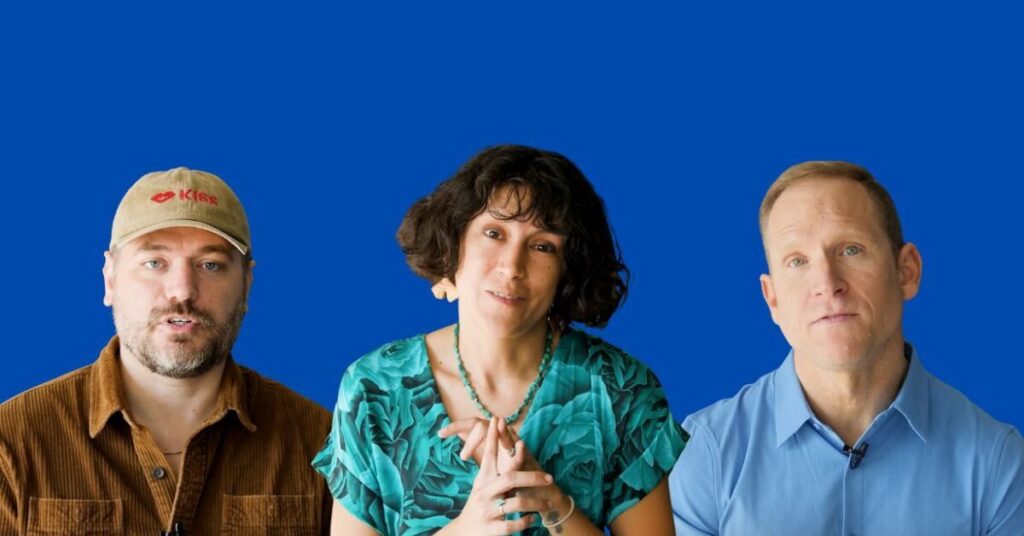
When Kristine Nash-Wong talks about the LGBTQ+ entrepreneurs she works with at Ann Arbor SPARK, her energy is palpable. As the director of entrepreneurial services – SPARK East, she’s the account lead for all three founders — Max Morefield (KISS App), Sierra Lambert (Gig-L), and Mark Thiesmeyer Hook (Align Athlete) — featured in this series, and she sees something special in them.
“They’re phenomenal entrepreneurs,” Nash-Wong said. “They each have that unique relentless trait that makes an entrepreneur successful. They’re tenacious and they follow up and they keep going, and individually, they’re all incredibly impressive.”
That combination of drive and SPARK’s support system has helped the three business leaders transform personal experiences into innovative businesses addressing real needs in their communities.
Bridging the gap between idea and reality
For all three founders, the distance between having an idea and building a business felt overwhelming at first.
“When I had the idea for KISS, you go from idea to creating a whole business, and how you do that, there’s so many steps that are involved and there’s so much to do, and there’s so many gaps from where you are from idea to bringing something to fruition,” Morefield told Pride Source in a video interview.
Thiesmeyer Hook encountered similar challenges. “It can be exciting as you’re coming up with a concept, and every day you run into a road bump or a roadblock where you’re like, I don’t know how to approach this,” he noted.
The roadblocks were specific and daunting. Thiesmeyer Hook needed to understand intellectual property protection for his physical product. “Anyone who’s developing a physical product has to think about, well, do I do a patent on this device so that it can’t be readily copied and put out there as a knockoff and basically knock away my company before it even has a chance to succeed,” he explained.
Lambert faced different but equally challenging questions. Running a coffee shop while building a tech platform meant she needed expertise she didn’t have. “I work with somebody through SPARK who helps walk me through things and gives me insights from working with other founders,” she said.
Addressing the specific, unique needs of up-and-coming entrepreneurs is where Nash-Wong’s approach becomes most impactful. She emphasized that SPARK works with each founder individually to identify specific barriers and connect them with the right resources.
“Underrepresented founders face more barriers,” Nash-Wong said. “It’s our goal to work with each founder individually and identify what those barriers are and help them find the resources they need.”
The support goes far beyond general advice. Morefield received funding through SPARK’s Business Accelerator Fund, which he used for trademarking his app, website design and creating animated videos. He also participated in SPARK’s Entrepreneur Boot Camp, which he described as “an accelerated program structured to move your idea forward and to test and to iterate and to make it as good as it can be.”
For Thiesmeyer Hook, SPARK’s network proved invaluable. “They helped me navigate challenges and figure out how to line up the whole process from a concept in my brain to a physical product that had some intellectual property protection to a manufacturer who could take that physical prototype and turn it into a thousand different units to fulfillment,” he said. The organization connected him with mechanical engineers for prototyping, website designers, videographers and marketing professionals who helped craft his social media strategy.
Lambert found support through SPARK’s Digital Summer Clinic program, including the work of two interns from Eastern Michigan University who needed marketing experience. “SPARK has been amazing with their programs, the people who work there, and financial support, too,” she said.
The nonprofit difference
What makes SPARK’s entrepreneurial services model unique is its structure as a nonprofit that doesn’t take equity in the companies it supports. Nash-Wong is passionate about this aspect of the organization’s mission.
“I’m pretty passionate about the mission of Ann Arbor SPARK entrepreneurial services and being able to help businesses grow as a way to further economic development in our community,” she said. “It’s a unique opportunity and a privilege having a front row seat to watching start-ups evolve and thrive.”
This approach creates a different kind of relationship. Thiesmeyer Hook described SPARK as “a friend handholding me through the journey of Align Athlete,” emphasizing the emotional support alongside practical resources. “Having an ally in your camp that can help you figure out what the next steps are and talk you up when you’re feeling a little bit down about your progress and validate the good decisions that you’ve made” has been transformative, he said.
Why representation creates better solutions
Each founder connected their LGBTQ+ identity directly to the problems they’re solving and their approach to building solutions.
Thiesmeyer Hook cited published research showing that chronic pain is higher in the LGBTQ+ population. “I know whenever I’m really under physical stress, I can feel certain parts of my body tighten up,” he said. “Think about all of those times you walk into an unfamiliar situation and you think about how people in that room might be judging you. Is it safe to be out? Are they looking at my body and making a judgment on my gender identity? That’s the stressful situations LGBTQ+ people face every single day when they go out into the world.”
Morefield emphasized that LGBTQ+ entrepreneurs understand community needs in ways others can’t. “Those particular people have specific needs and problems and issues that we are the only ones that are capable of understanding in real-world values,” he said. “As an LGBTQ+ entrepreneur, we have firsthand knowledge about how we can solve those issues.”
Lambert spoke to the importance of seeing yourself reflected in spaces you want to enter. “People shut themselves out of rooms really often, and if you don’t see yourself in a room, it’s easy to shut yourself out,” she said. “When somebody builds something for you, somebody has to be in that room to build it who knows what you’re going through and what you need.”
For Morefield, this moment feels particularly urgent. “In our current climate with our current administration, I think that it’s really important for us to represent ourselves and to be ambassadors for ourselves,” he said. “On an individual state level, it’s important for us to move forward and to show that the LGBTQ+ community can contribute in a really meaningful and impactful way.”
All three founders emphasized that the tech space is more accessible than it might seem.
“Taking one step forward is more than what most people do,” Morefield said. “So if you have an idea and you’re passionate about it, pursuing it is the first step. And places like SPARK will be there to support you.”
Lambert echoed this accessibility. “I think sometimes the tech space can feel really intimidating, especially if what you’re seeing is just on your phone and you’re seeing all these events,” she said. “It’s not as scary as it feels. Go to one event, meet one person, see what they have going on, see what you have going on, and then you can build from there.”
Thiesmeyer Hook offered direct encouragement to other LGBTQ+ entrepreneurs. “Don’t be hesitant at all. SPARK has been an amazingly friendly place for an LGBTQ+ founder, and I found nothing but nurturing and support from them.”
Ann Arbor SPARK supports entrepreneurs and startups throughout Washtenaw County with mentorship, funding and accelerator programs. This is part four of our LGBTQ+ Tech Innovator Series, highlighting diverse entrepreneurs shaping Michigan’s tech future. Since November, we’ve featured Mark Thiesmeyer Hook of Align Athlete, Max Morefield of KISS app, and Sierra Lambert of Gig-L. This final installment explores what drives these founders and how SPARK’s partnership model helps them overcome barriers unique to underrepresented entrepreneurs.
