In this episode, Paul Krutko talks with Melissa Sheldon, SPARK’s Director of Research, about SizeUp SPARK, a free business intelligence tool supported by Bank of Ann Arbor. They discuss how the platform helps small businesses access market research, benchmarking, and local economic data to make smarter, data-driven decisions and strengthen Washtenaw County’s economy.
READ INTERVIEW
Paul Krutko: Welcome to Ann Arbor SPARK’s CEO Podcast…Conversations on Economic Opportunity. My name is Paul Krutko, and I’m the President and CEO of Ann Arbor SPARK.
Joining us today is Melissa Sheldon, the director of research here at Ann Arbor SPARK. In her role, Melissa leads the charge in gathering and analyzing the data, the power that sparks strategic initiatives. We try to do what we do based on the facts that are presented before us. So data is very important and it is really the backbone behind smart regional growth.
So today, what I wanted Melissa to do is guide us through SizeUp SPARK, a free data-driven business intelligence tool launched by us with the support from Bank of Ann Arbor to empower small businesses and entrepreneurs across Washington County. It has various modules like Insights, Small Business Advisors, Shop Local, and Pulse. SizeUp SPARK puts market research and competitive benchmarking, local demographics, real-time economic tracking and strategic guidance, all previously accessible only to big companies and big corporations, into the hands of our growing local businesses at no cost.
So this is again, as I said, sponsored by the Bank of Ann Arbor, and we’re very appreciative of that sponsorship. This tool is designed to level the playing field and catalyze growth, innovation, and new jobs right here in our region.
So Melissa, thanks much for joining us. This is sort of a series we’re bringing to the audience, various leaders in our organization who are working on significant projects, and I really appreciate your work. This was one that I found somewhere and said, Melissa, let’s look at it. And you took that on and got it all the way to implementation, so kudos to you.
But anyway, let’s start off with what you do in general to kick things off, give our audience a high-level view of your role as director of research at Ann Arbor SPARK and how does that intersect with the work that we do?
Melissa Sheldon: Sure, thank you, Paul. So as SPARK’s Director of Research, I support our business development team in all of SPARK’s core functions by gathering and analyzing data that guides our strategy and storytelling. So my work touches business attraction, expansion, retention efforts, and then all the way to small business entrepreneurship. So whether we’re helping a local company grow or working with a new firm, considering moving to Washtenaw County, I help provide the data and insights that help position our region as a great place to do business. And that information, those insights include talent, pipeline analysis, compensation data, labor market trends, commuting patterns, information on key industries, and what’s going on in our ecosystem here. And all of this helps businesses and community partners to better understand our regional strengths and ultimately help SPARK make the case for why this is such an attractive place to locate a business or your family to work and live. And when it comes to small business specifically, that focus has been making that type of data accessible through tools like SizeUp. That way, entrepreneurs have the same type of insights to make informed and confident decisions.
Paul: Yeah, one of the things a little bit off the series of questions that I was going to ask you, but one of the things to share with the audience, it’s really important, is we have all been working with the internet and data resources from probably the early, late nineties, early two thousands. And it’s important,the work that Melissa is doing, because now in today’s economic development world, your clients, whether they’re small, large or medium-sized are looking at you before you know they’re looking at you. So your presence online and the strength and the representation of your data is really, really important to get to the next step. It used to be, and I’m now dating myself, that we economic development professionals were the keepers of the information and the companies had to reach out to you. There wasn’t an online presence, and so you had immediate knowledge that someone was interested in what your programs or a site or something you were doing. Now it’s really important to have that robust presence that you’re managing for us online. So we’ve really leaned into this tool data as a tool to support small businesses.
What led to the decision to introduce SizeUp in Washtenaw County, and how does it help us reach and support more businesses across the region?
Melissa: So we really wanted to make sure we were providing small businesses with the same kind of high-quality information that large companies have access to. Small businesses are what drive economies. They create jobs that add vibrancy to our communities and they’re what helped make our region unique. So here in Ann Arbor, we have a very diverse economy. SPARK provides a lot of services to tech-focused companies, but we also wanted to make sure that we were supporting businesses in any industry at any stage, whether it’s a startup, a family-owned shop or an established company looking to expand. So by offering free, data-driven tools like SizeUp, it has allowed us to help people make smarter decisions about things like where to locate who their competitors are and what opportunities exist in the market for folks that may not have otherwise seen themselves as a client of SPARK or as a partner of SPARK. It levels the playing field and it helps us extend our reach as an organization to businesses that might not have the time or resources to connect with us.
Paul: Yeah. One of the things that I think caused me to be interested in it was that when you’re working with small businesses and people get a sense as to how many small businesses there are for an economic development organization. I mean, we have 25 staff members, many of them not working in small business at all. And so how many could you serve in a day in terms of a conversation? So the notion of a scalable tool that also meets the businesses where they are, and that is say I have small children at home, I’ve come home from work, I don’t have time to go to a seminar or a meeting, but maybe at nine o’clock at night I can log on to something that’s going to help me the next day at work. And so that was part of the idea that I think a lot of us in the economic development profession were looking for a long time was a scalable tool, but also a tool that brought the same kind of data, which you said earlier in the conversation that big companies get. So that’s what SizeUp is about.
So what we’re going to do now is it has for what we think are very powerful modules, you’re going to walk us through each one briefly and give us an example of how business might use each tool. So
Melissa: Yeah, absolutely. So I’m going to pull up the tools right on our website and we will walk through them together. So on our website, and we’ll put this on the screen, we’ll talk about it, and we’ll mention it a few times: AnnArborUSA.org/SizeUp. We’ll take you directly to this page where you’ll see Business Intelligence Tools and SizeUp is a suite of essentially four modules, all free, all accessible, right from here.
The Small Business Advisor is a really fantastic tool. We put this one first intentionally, just trying to think through what the client journey might be. If you’re coming to these resources and maybe you just have an idea, you’re thinking about starting a business, you’re not quite sure how to go about doing that, Small Business Advisor is a great place to start. So it’s going to help give you some step-by-step guidance.
You’re going to help discover different topics and dig into information and really learn about what it is that you are getting into, whether you’re just starting or maybe you are an existing business that’s thinking about expanding or you want to sell your business, there’s going to be resources in here for each of those. So I’ll just quickly open it up to show how it’s organized so you can explore. You can just start typing in a topic. So if I want to find out how to get a business loan, I can start looking at information about that, maybe review some videos, look at tutorials, see some sample templates of business plans. But if you’re not sure exactly what topic to look at, you can also just look at maybe the stage that you’re in. So there’s planning for your business, starting your business, managing your business and growing your business, and a variety of topics in each. So going back to that landing page where you can access all four modules, the Small Business Advisor. Before I move on from that one, I just want to quickly mention, too, that this is not intended to be or replacement for SBDC advisor or any of our other trusted partners that we encourage all entrepreneurs to work with. This is really a tool that can help make you smarter and asking better questions. You can dig into these topics on your own time and then come to those meetings with your advisors with great questions, with some of your own insights so you can make the best use of that time with the advisor. We really see this as a complementary tool, even if you’re already working with an advisor.
Moving on to Insights, this is where all the big data’s at. This is where we see folks spending a ton of time. This is where you can measure your business performance if you already have an existing business or you can put in some hypothetical data and see how you would potentially stack up against local competitors in this region. If you’re just in the process of thinking through what kind of business, what should my revenue look like, how many staff members might I need to hire, where should I locate? Those insights are critical. They’re in here. If you have an established business, you’re going to find a ton of resources in this tool that are useful to you, and I’ll point out a few of them. And then you can also really dig deep into your customer base, how you can expand your advertising, finding competitors, where they’re located, what kind of business they’re operating, better target your customers, but not just customers from an end user standpoint, but maybe from supply chain perspective.
So some really great insights in here. So for the sake of this example, I’m going to use a daycare operation in Ypsilanti. So you just type in a broad industry, type of business category, and then it’s going to ask you what kind of data are you looking to get today? So do you want to measure your business performance? Do you want to find customers, suppliers, and competitors? Maybe you’re looking to optimize marketing and advertising, or you want to analyze some demographics, look at potential customers in that way. So really cool insights. So Insights, I think, has been really powerful for folks. This is where you can go through and because I’ve used this tool before, it’s automatically populating some data that I’ve used in a previous example. But if you were coming to this tool for the first time, all of this is editable and it’s going to ask you for your specific business information so that it can SizeUp your business against those in the same industry here locally.
So you can see in this example, if I am shooting for, or maybe I have a revenue of $450,000 annually that I’m falling a little below my competitors in the region. And what’s cool about this tool is it not only gives you the local comparison, it’s going to give you some broader buckets. So we’re looking at Washtenaw County where it specifically says Ann Arbor, that’s our MSA, our region, which happens to align with the county, in our case, the broader state ecosystem, and comparing to those across the nation in the same type of business the maps are, I can zoom in and out of the maps, I can toggle things on and off so I can really get deep in the weeds if I want to about learning more information about how to maybe expand my revenue or whatever metric it is that we’re looking at.
You can dive really deeply. The really great thing about SizeUp, and I’ll pause here just for a moment. So you can see every single metric gives you consideration so you can understand what you’re looking at. You don’t have to be a data expert, you don’t have to have a background in analysis. It’s going to tell you what type of data you’re looking at and how you can use it. And then for most metrics, we’re also giving you some really local resources that we have customized to connect you with other either organizations or opportunities, events, whatever the case may be that will be helpful for that particular topic. So I’ll just slowly scroll through here. So you can see there’s lots of different metrics, lots of different ways to size your business up, your performance against others. You can look at for your workforce, the size of your workforce to your cost effectiveness.
Revenue per capita is a really interesting one. Local retention we have found is something that a lot of folks when they’re looking at this are like, oh my gosh, this is such fantastic information to know because I thought I was just losing people. It turns out turnover is high for everyone, so it helps understand the broader picture and get them out of that day-to-day if they do have a business already. So lots of different things in here. I mean, you can even look down into the nitty-gritty healthcare costs, workers’ comp, how many hours should I be open looking at competitors for daycare, if I’m only open 40 hours, it looks like I’m really missing the mark here because my competitors in Washtenaw County, on average, they’re open 51 hours. So you can really start to hone in on some actionable things to help move your business forward and grow. So really great insights.
And then just quickly scrolling back up to the top, if I had clicked on this my business from that initial screen, I can still see these other options. So if I want to start thinking about my competitors now I can really dig deeply into where they’re located. If I want to see what neighborhood I want to serve, how I can optimize my advertising and really target families, I can look at it by demographic and target families within a certain mile, radius or drive. So just so many different ways to dive into the data. And I will say that that’s a lot of information just in that short little overview that I did. And we offer right from our website where you can schedule one-on-one support so you can schedule time to meet with a business advisor. You can meet with someone from our team, talk through these things.
You can even tell them like, gosh, this seems intimidating. I’m not sure what tool to use, and they can walk you through that. That’s great. Yeah, so in a nutshell, that’s insights. Obviously, lots to unpack there. We could spend a whole hour just talking about that tool.
The last two modules here, Pulse is where you can dig into any particular industry. So I won’t open that one up because it looks nearly identical to what we were just looking at. But if you want to understand any particular industry a better, maybe your new business coming in and you just want to get a lay of the land better, understand who is in the industry or where you can source maybe different supplies or connect with a vendor from Pulse is a really great tool for that.
And then the Shop Local tool is another favorite. This is where you can, it’s like our Yellow Pages, you can go in and find a local business. If you’re looking for a new place for dinner tonight, you could come here and see what restaurants are in the community and maybe pick a place. So it’s definitely really great.
Paul: Like say you’re a landscaping company and you want to find who could give you better equipment or support for that business. That’s part of it, too. It has the business-to-business component on that.
Well, do you have any quick little anecdotal stories or feedback from local businesses who’ve used it and found it to be valuable?
Melissa: Yeah, so we’ve heard a lot of great feedback so far, especially from entrepreneurs that have spent time exploring the tool. They really love the Small Business Advisor so they can dig into those different topics. The Insights module is by far the most popular. Lots of folks are using that, and we’ve heard that it’s helping them think through their business plans, it’s helping them better understand their competition. It’s helping truly to back up their ideas with data, which is really exciting.
Then on the established business side of things, as you alluded to, it’s really good for prospecting. It’s good for finding local vendors, organizations that you might want to partner with. If you’re outsourcing a widget that you want to see if maybe you can bring that local and help a shop right down the road, for instance. That’s been really exciting to see that those conversations and those aha moments of like, oh my gosh, I didn’t know that there was something local here.
Paul: Yeah, that’s an interesting aspect that in sort of the people side of how this used to be and somewhat still continues to be for a lot of economic development organizations, you would talk to a business and they would say, oh, I’m trying. I buy this from here. And we might in our head or in our contact management system, well, there’s a company one mile from you that does that, and they never knew that. And so that’s interesting about this particular thing from a B2B perspective is because part of that is, well, if you’re sourcing something from Wisconsin, it’s got to get here, it’s going to have a transportation cost. There may be some delay on their end, whatever, or maybe you need to modify it somehow. And having a supplier a mile away is a distinct advantage on cost, maybe on costs, maybe on just in time delivery and all that kind of stuff.
So one of the things that we wanted to touch on as well is we think that it’s not just the small businesses of the startups that use this, but we think you’ve already mentioned how established businesses can use it, but community partners, municipal leaders, are you seeing that they could benefit from these tools as well?
Melissa: Oh yeah, for sure. So it’s a fantastic resource for pretty much anyone that we’ve engaged with. The established businesses are using it in all the ways that we’ve talked about the community partners, including the Chambers or our municipal leaders. They’re using the data to both better understand the business landscape in their communities, or maybe if they’re new to their roles, it’s helping them onboard faster, but they’re also able to more readily share insights about their communities and the work that they’re doing or the industry mix that their communities represent. They’re armed with that information and can talk about it more easily. It’s giving them a clearer view of what’s growing in their communities, which is really helpful and maybe where there are some gaps. So we’re hopeful that as this progresses, as we can increase awareness on the tools, that this can really maybe inform some strategic planning in the communities. Maybe even as folks are working on a master plan as an example, they can think through zoning and the type of land use where they have maybe some gaps that they want to fulfill locally. So it’s really a powerful tool for startups, but I think it’s equally valuable for anyone that is thinking about or working on strengthening our local economy
Paul: For sure. In a way, if you’re one of our smaller municipalities and you’re in the city administrator’s office and you want to recruit a business to your community, you’re now armed with being able to tell them, well, there really is a market for you. Here’s where the competitors are. This is what you would have to pay to attract the workforce. And so it does create a really good tool when you’re trying to do that sort of targeted sort of even main street business development.
Well, so we’ve been doing this since when?
Melissa: We launched in March.
Paul: March. So what’s the data telling you about how many people are using it and what is it telling you about the demand for this service?
Melissa: Yeah, so we do have a lot of usage data, and the numbers tell a really encouraging story. We’ve gathered the information on how people are using the tool also, and it’s clear that the demand is high. People are hungry for this kind of data to help drive their business decisions. So I mean, just thinking about the Insights tool alone, we’ve had nearly 950 users generating more than 47,000 reports and sub-reports. So that means users are really digging into the tool. They’re spending a lot of time with the data and they’re using it to answer specific questions, which is exactly what we had envisioned.
The top report types in that tool have been the customer discovery and supply chain reports with over 630 of those alone, performance benchmarking, target advertising, demographic analysis, also very popular reports. So we’re seeing people use it for all angles in really diving in deep.
And something that I intentionally kept as a surprise to share during this talk was that we recently got feedback from the SizeUp team on our performance compared to other communities in terms of usage, and they shared with us that Ann Arbor SPARK’s performance with launching this tool aligns more closely with larger metro areas like Sacramento or Austin than with communities of our size, our size. So it’s a great reflection on how engaged our business community is and how we’re spreading the word and supporting entrepreneurship here and how well the tool is resonating. But I think it’s also a testament to how committed people are to their ideas and really diving in deep and using the tool. So that was really from a data perspective, I was really excited about that.
Paul: Well, so obviously we want to get as many people engaged in this as possible.
So looking ahead, what are some of the next steps that you see in getting more participation, and are there upcoming partnerships, trainings, or initiatives that we’re excited about to get more people who are thinking about this to utilize this tool?
Melissa: Right now, we’re really focused on helping people understand just how much they can do with the tools. A lot of folks have heard about SizeUp, but once they see how interactive and customizable it is, they realize how powerful it can be for their business planning or decision-making. So we’ve recently added a business navigator who holds regular open office hours to answer questions and provide that hands-on support for anyone who wants help using the tools.
We’re also working with that business navigator to plan a series of training sessions that we will share on our events calendar. So I encourage everyone to subscribe to our events newsletter, check our events page on the website, because the trainings, the tools will be free. So these are really great resources.
And then I want to take a moment just to thank again Bank of Ann Arbor for being the presenting sponsor because without their support, we wouldn’t be able to offer these things for free and our community partners.
So the last call to action from my side is if you are maybe listening from a chamber or one of our municipal partners and you think, gosh, there are so many businesses in my community that could benefit from a tool like this, we would love to host a training session in your community. We’ll come out and bring this information to your businesses, to your community to help them take advantage of these tools, too.
So we’ll continue to monitor the usage and engagement, and we’ll add events, I’m sure lots of them in the future. So definitely check the website for those.
Paul: So usually in one of these kinds of conversations you end with like, well, what’s the one thing that you would want a business owner to know? And so as we close, what would be that one thing? Is it how you access the tools, or what would it be for you, Melissa?
Melissa: I think it’s where you can access it. So again, it’s on the website, AnnArborUSA.org/SizeUp, but beyond where it’s at, just to use it, explore it, go in. If you’re not familiar, or maybe if you’ve heard of it before and you haven’t opened it in a while, check it out. Because every time, even on our team when we’re using it, we’re finding new and interesting ways to use the data. So check it out!
Paul: Yeah, as we close, one of the things that we didn’t talk about is somebody might be curious, where does the data come from, and how is it updated? And I think you can sort of nutshell that really quickly. These are broad databases that major corporations access that we are accessing and they’re updated regularly. Is that a fair?
Melissa: Absolutely. And on our website where we have the tools, there’s a FAQ section at the bottom. Data sources is one of the first questions that’s on there. One of the most frequently asked questions that we get, and there’s a broader explanation there. But yes, that’s in a nutshell, exactly.
Paul: Right, to give listeners confidence or potential users confidence. This data is regularly updated. You’re not looking at a picture of four years ago or two years ago. It’s constantly being refreshed. The tool interfaces with those databases to give you the opportunity to learn. So that’s the main thing. Well, Melissa, thanks for talking with me today. And really, thanks for all your great work at SPARK. This is one of the things you do. There are many other things that you do. For example, Melissa helps research. We do a, in football season, a weekly comparison between the town of the university we’re playing against. So if you haven’t seen that, you might want to try to look online for that. It can be interesting. We do a lot of work comparing ourselves to other communities around the country as well. And Melissa leads that for us. So again, thank you, Melissa.
And I want to thank our audience for listening and learning more about those leaders and organizations working hard to create the Ann Arbor Region’s economic future. These conversations are brought to you by Ann Arbor SPARK. For more information about Ann Arbor SPARK, you can find us on the web at annarborusa.org. We’re also on Facebook, Instagram, and LinkedIn.
Melissa Sheldon’s Bio
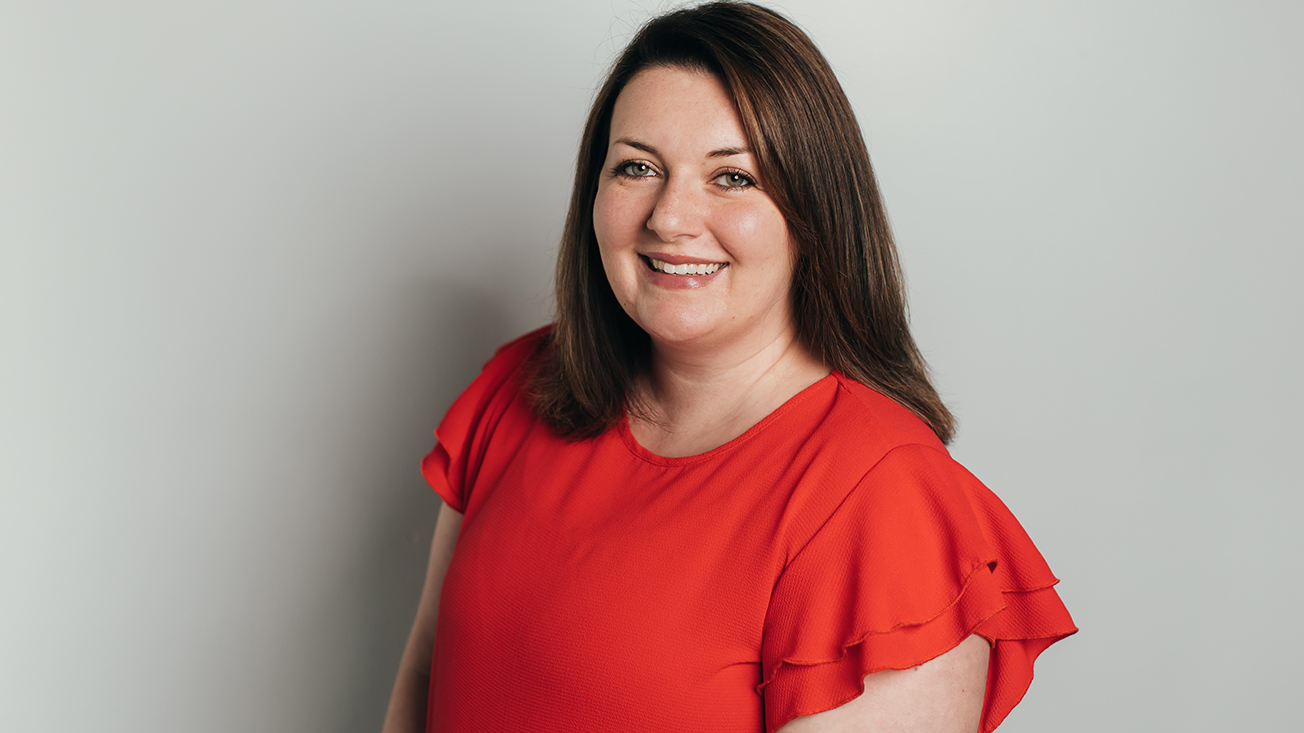
As the director of research for Ann Arbor SPARK, Melissa Sheldon leads the organization’s business and economic research initiatives. Melissa is an experienced workforce development professional with experience overseeing regional workforce training initiatives and research projects. Prior to joining SPARK, Melissa held various roles with the Workforce Intelligence Network for Southeast Michigan and the Michigan Works! system.
Melissa is a Michigan native and a two-time graduate of Siena Heights University in Adrian, MI. She holds a master’s degree in organizational leadership and a bachelor’s degree in business administration.
